
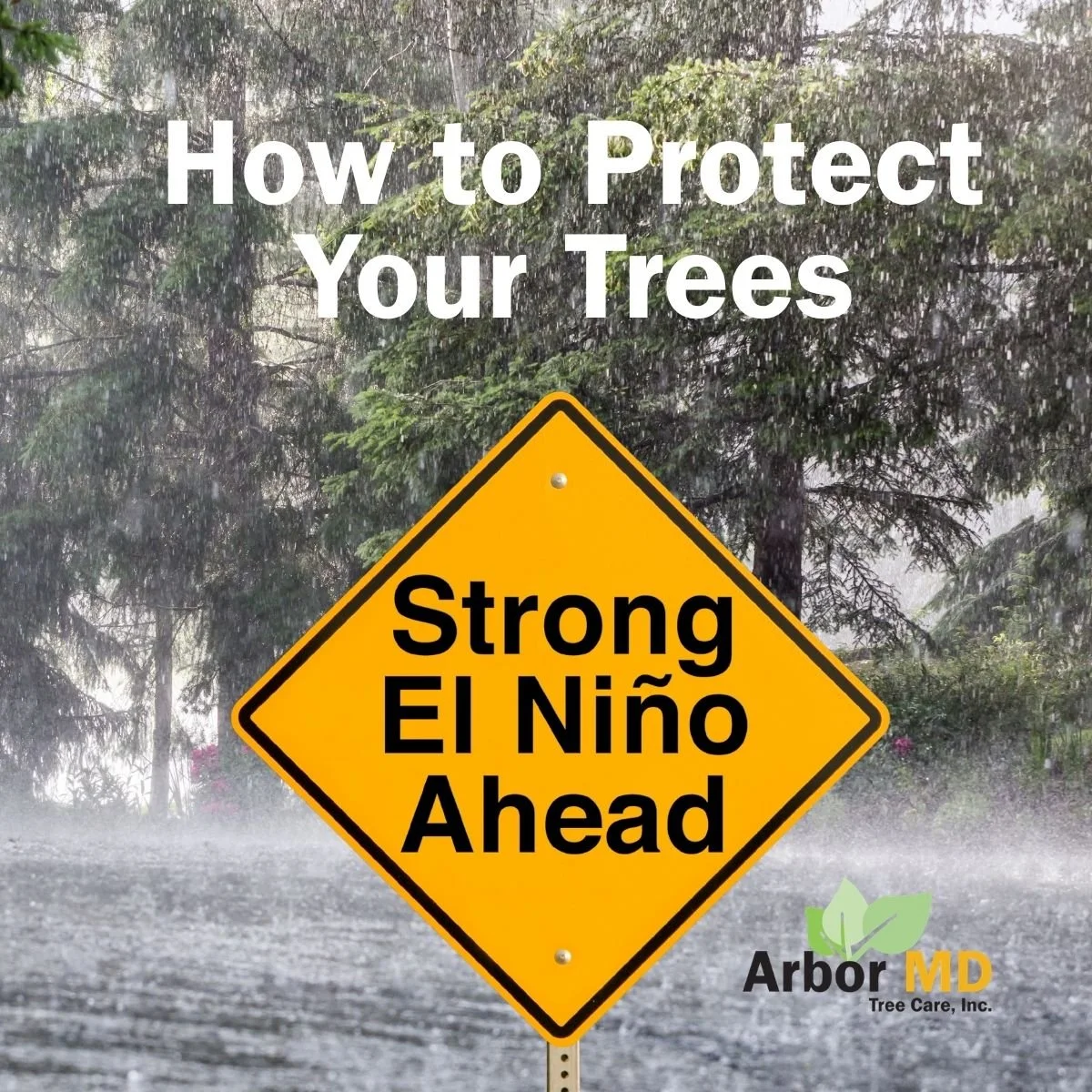
Wet winters are welcome after a dry summer—until a mature oak crashes onto a clubhouse roof. For commercial property owners, HOA managers, and large estate owners, a Super El Niño isn't just a weather headline. It's a direct threat to the trees on your property and the people beneath them. Here's what's happening, how it affects your trees, and the steps you can take today.
What is a Super El Niño?
El Niño is a climate pattern where ocean temperatures in the central and eastern Pacific rise above average. This shift changes weather across North America. A "Super El Niño" describes an especially strong event, marked by significantly warmer ocean temperatures than a typical El Niño year.
For the western United States, that usually means one thing: more rain. A lot more. Storms tend to be wetter, more frequent, and more intense—which sets the stage for problems that don't show up until the ground is already soaked.
How will a Super El Niño affect trees in California and the Pacific Northwest?
Regardless of the El Niño forecast, heavy rainfall and strong winds can create several risks for trees: :
Saturated soil can reduce root stability. Prolonged rainfall can leave soil waterlogged, reducing its ability to support and anchor trees—especially trees with compromised roots, poor drainage, or existing defects.
High winds meet heavy canopies. Strong storm winds push against wet, dense foliage. This adds stress to branches and trunks already under pressure.
Existing weaknesses get exposed. Trees with decay, cracks, poor structure, or previous storm damage may be more vulnerable to failure.
Rapid growth creates instability. Abundant rainfall can trigger fast, heavy new growth that isn't well supported by the existing root system.
These conditions can increase the risk of fallen limbs, uprooted trees, and property damage —often during the worst possible conditions, when crews are stretched thin and emergencies pile up.
What should Commercial Property and HOA Managers do now to protect their trees?
The best time to act is before the storms arrive. Waiting until a tree is already leaning means paying emergency prices for reactive work. Here's where to start:
Schedule a professional tree risk assessment
A certified arborist can identify hazardous trees, structural weaknesses, and drainage issues that aren't obvious to the untrained eye. This is the single most valuable step you can take.
Prune strategically before storm season
Proper, selective pruning can reduce risk by removing dead, damaged, or structurally weak branches. A qualified arborist can determine whether additional pruning is appropriate; excessive thinning or topping can weaken a tree and can actually decrease the damping effect of correct branch structure and thus increase the wind load that is transferred to the base of the tree. Fear-driven over-pruning can increase the likelihood of entire tree failure.
Address drainage and soil conditions
Poor drainage worsens root instability. Correcting standing water issues around trees helps roots stay anchored when the rain arrives.
Remove trees that pose a clear hazard
Some trees are simply too compromised to save. Removing a high-risk tree now is far cheaper—and safer—than dealing with the aftermath of a collapse.
Document your due diligence
For HOA managers and commercial owners, a professional assessment creates a paper trail that shows you acted responsibly. This matters for liability if a storm-related incident does occur.
Protect Your Property Before the Storms Hit
A Super El Niño turns ordinary trees into potential liabilities. The properties that come through the season intact are the ones that are prepared early—by identifying risks and correcting them before the ground turns to mud.
The certified arborist teams at Arbor MD can help. Schedule a visit today to assess your trees, spot hidden hazards, and build a plan that keeps your property and its people safe through the wet season ahead.
Arbor MD Tree Care, Inc. specializes in year-round care of treescapes for community living communities, commercial properties, corporate campuses, and other shared spaces in the SF Bay Area, Sacramento, Southern California and Greater Seattle/Portland. Our certified arborists focus on safety, property value, and special PHC or Plant Healthcare, to ensure your trees remain healthy and your property retains value.